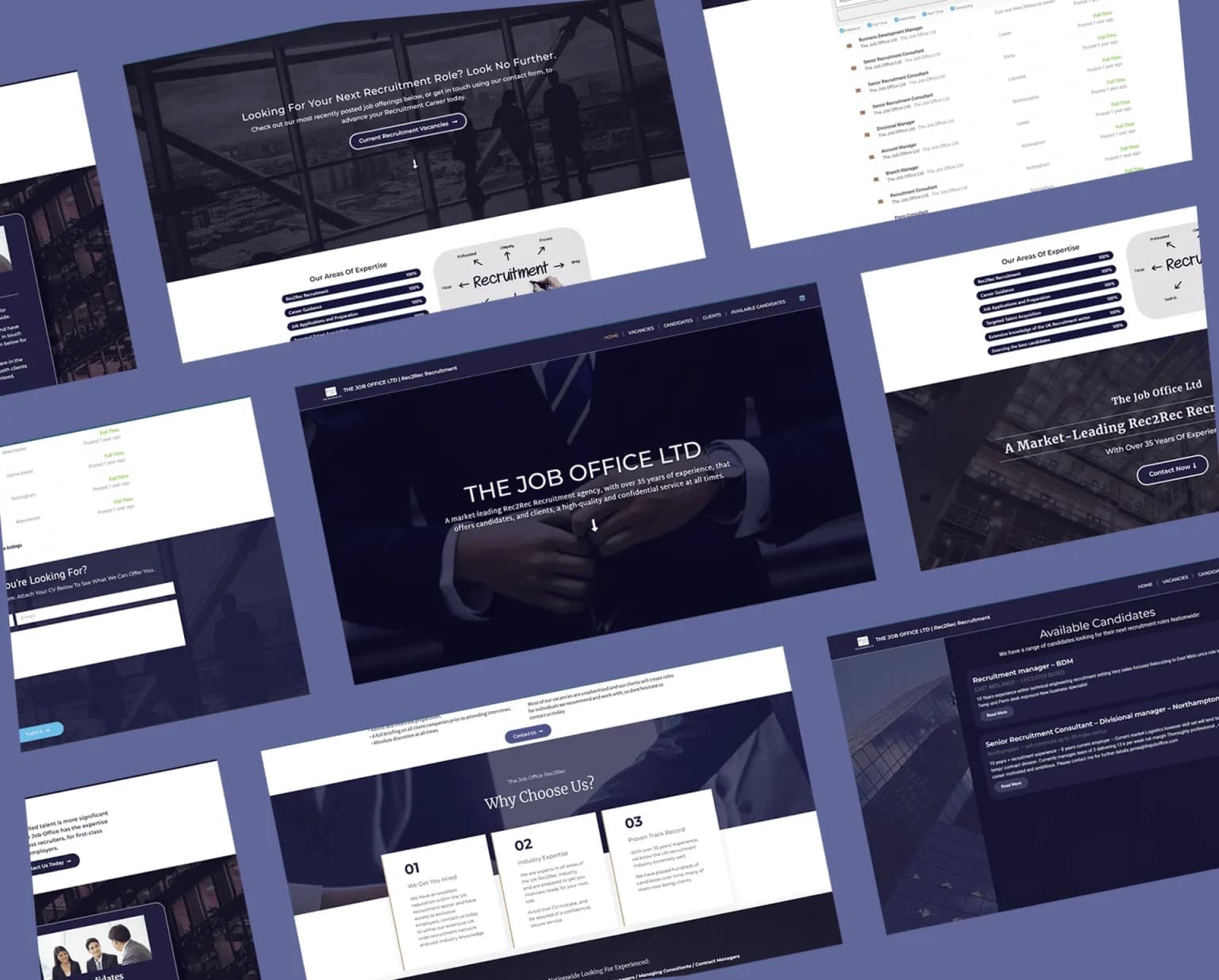
Commercial
DesignThe Job Office
Recruitment website with custom job publishing and admin workflow
Recruitment website and WordPress build with custom vacancy publishing, candidate applications, and internal admin tooling.
WordPressHTMLCSS
Gameplay engineering case study for a modular Unreal Engine climbing system delivered during commercial production
Procedural Unreal Engine traversal system built for commercial game production, using runtime surface detection, inverse kinematics, and animation blending to support dynamic climbing across complex environments.
Category
Game Dev
Primary role
Unreal Engine Gameplay Programming
Focus
Gameplay Engineering / Procedural Traversal

Overview
Procedural Climber is a modular Unreal Engine traversal system built to let characters climb and transition across complex geometry without depending on hand-placed climb markers.
The work was delivered during a freelance gameplay programming contract with Elseware.ca and was designed to slot into a wider commercial production pipeline rather than exist as an isolated prototype.
Challenge
The core problem was making climbing feel reliable across varied level geometry while preserving believable character motion and responsive player control.
Instead of constraining traversal to predefined interaction points, the system needed to detect valid surfaces at runtime, solve alignment against changing wall angles, and manage transitions cleanly between grounded, climbing, and detach states.
Approach
The system was designed as a procedural traversal layer that could evaluate nearby geometry, validate climb opportunities, and expose adjustable rules for different traversal behaviours.
That made it possible to support dynamic movement across a wider set of encounter spaces while keeping the implementation flexible enough for production tuning and iteration.
Design & User Experience
From a player-facing perspective, the design goal was not just technical correctness but readable, believable traversal. Character attachment, motion blending, and contact placement needed to communicate stability while still feeling responsive under input.
That meant shaping the system around traversal readability as well as mechanical coverage, so climbing could feel intentional rather than like a collection of disconnected state changes.
Implementation
The implementation combined runtime collision queries, surface-normal analysis, orientation solving, and traversal-state evaluation to determine when the character could attach, move, transition, or detach.
It was built to integrate with existing movement and animation systems, with rules that could be tuned without rewriting the core traversal logic each time designers needed different behaviour.
Technical Implementation
Traversal system design centred on analysing nearby geometry in real time and converting that information into stable movement decisions. Surface checks were used to validate climbable areas, calculate relative orientation, and preserve coherent transitions as the player moved around changing wall shapes and edges.
Inverse kinematics was then used to adapt hand and foot placement against uneven surfaces so the character could maintain more convincing points of contact instead of relying on fixed authored poses. That IK layer helped the system hold up across irregular geometry while staying responsive enough for gameplay use inside production conditions.
Results / Outcome
The finished system supports more flexible climbing across complex environments while reducing dependence on manually authored traversal markers.
It demonstrates gameplay engineering depth in traversal system design, runtime detection, and inverse-kinematics-driven animation support, while remaining practical for integration into a commercial game workflow.
Project Preview
Tech Stack
Role
Related Projects
Recruitment website with custom job publishing and admin workflow
Recruitment website and WordPress build with custom vacancy publishing, candidate applications, and internal admin tooling.
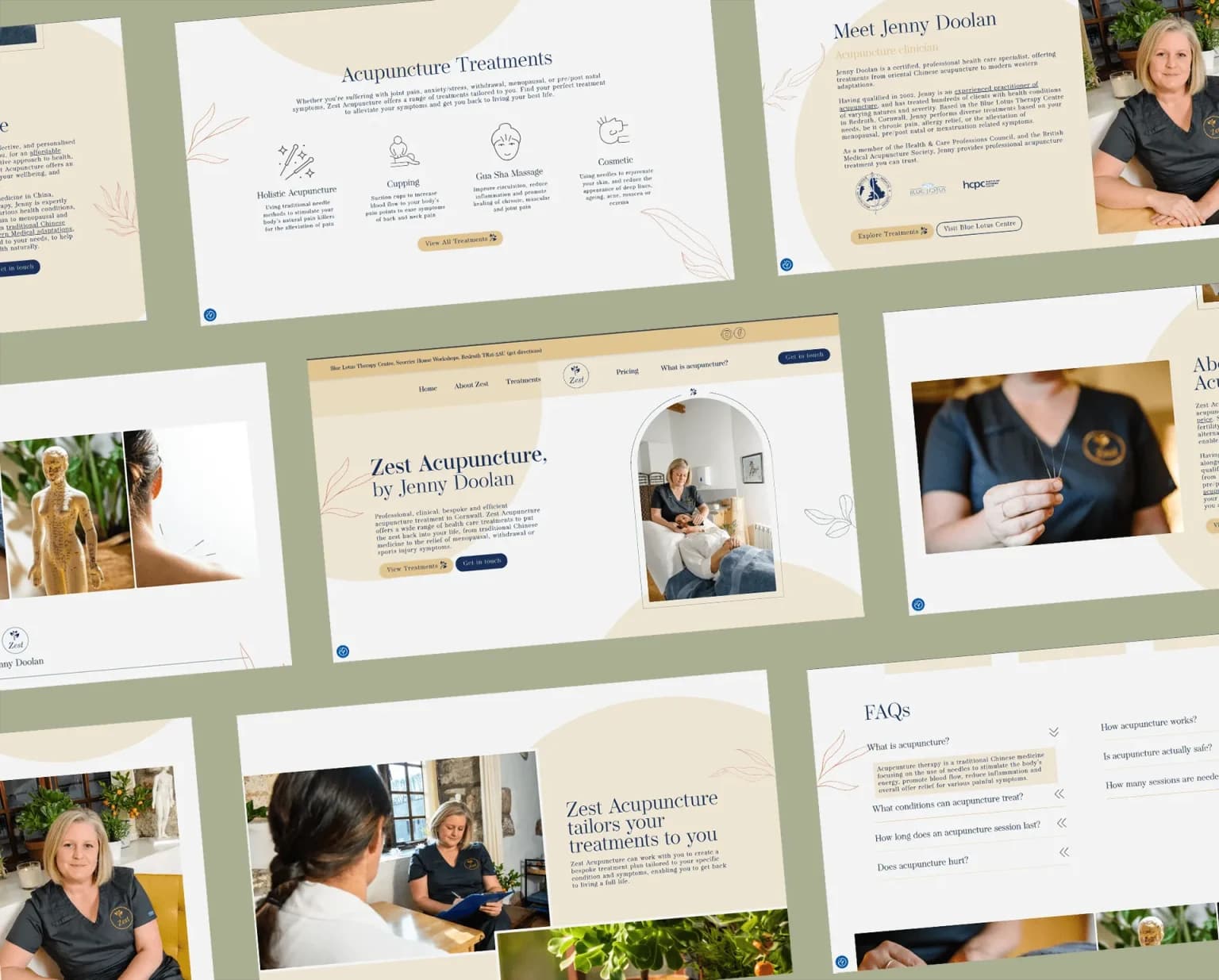
Website Design & Development
Calm, responsive WordPress website for an acupuncture clinic, designed to clearly explain treatments, build patient trust, and perform well on mobile and local search.
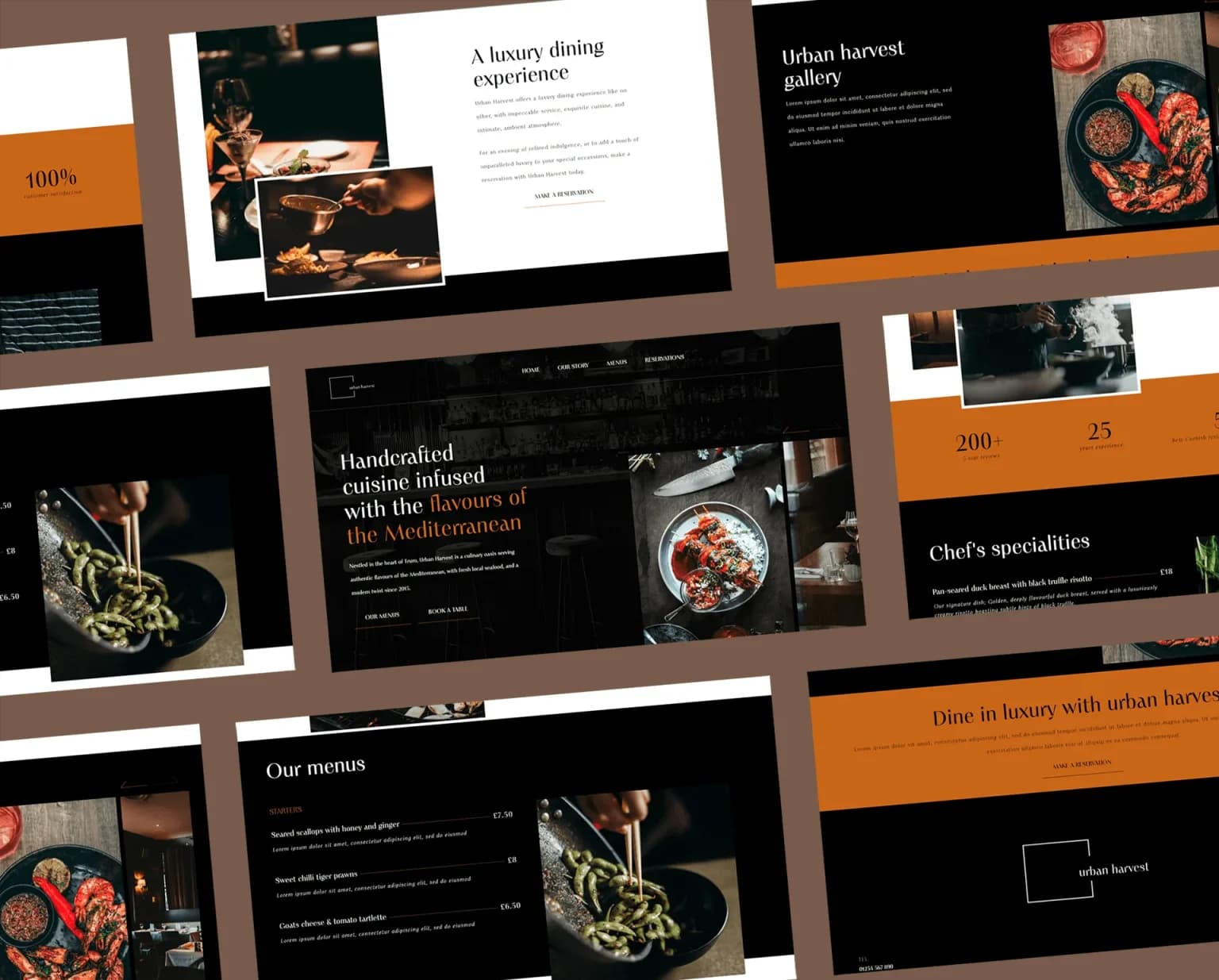
Restaurant website with menu presentation and reservation flow
Restaurant website built to present the menu, atmosphere, and booking path with minimal friction.